Did You Know?
The first drive-in restaurant in America was Kirby's Pig Stand, opened in Dallas, Texas in 1921. Carhops were originally all male — young women weren't hired as carhops until the late 1930s, when owners discovered it dramatically increased sales.
You pulled into the lot and found a spot under the neon lights. You rolled down the window — no air conditioning in those days, but you didn't mind — and waited. Within moments, she appeared: the carhop, moving with practiced grace between the rows of cars, her tray balanced on one hand, her smile wide and genuine. She took your order, called it back to the kitchen, and returned minutes later with a tray that hooked right onto your window: two root beer floats, a basket of onion rings, and a cheeseburger wrapped in wax paper.
You were at the drive-in. And for one perfect American moment, everything was exactly right.
How the Drive-In Was Born
The drive-in restaurant was an American invention, born from the collision of two great national passions: the automobile and the appetite. The concept emerged in the 1920s, when a few enterprising restaurateurs realized that the growing number of car owners represented a captive market — people who were hungry, in a hurry, and didn't want to leave their vehicles.
The first carhop service is generally credited to a Dallas restaurant called the Pig Stand, which opened in 1921 and stationed young men at the curb to take orders from customers who didn't want to park. The idea spread quickly. By the 1930s, drive-in restaurants were appearing across the South and Southwest, and by the postwar boom years of the late 1940s and 1950s, they were a national institution.
The golden age of the drive-in coincided perfectly with the golden age of the automobile. As cars became more comfortable, more stylish, and more central to American social life, the drive-in became the natural extension of car culture. You didn't just drive to the drive-in. You arrived. You were seen. The car was part of the experience.
The Carhop: An American Original
At the heart of the drive-in experience was the carhop. The name came from the early days, when servers would literally hop onto the running boards of moving cars to take orders. By the 1950s, the practice had become more refined — but no less theatrical.
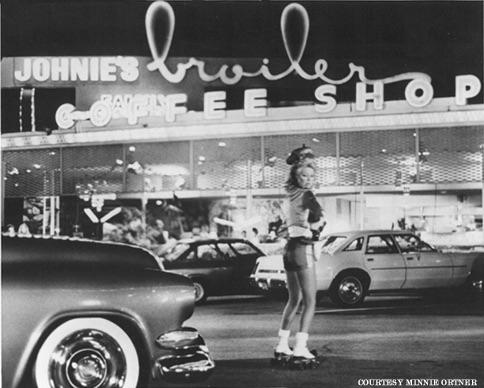
The great innovation of the postwar drive-in era was the roller skate. Carhops on skates could cover the lot faster, carry more trays, and provide a kind of entertainment that walking simply couldn't match. The sight of a carhop gliding between cars, tray aloft, navigating the lot with effortless skill, became one of the defining images of 1950s America.
The carhop uniform was carefully considered. At most drive-ins, it featured a short skirt, a fitted blouse or jacket in the restaurant's colors, and a paper or cloth cap. The effect was somewhere between a cheerleader and an airline stewardess — youthful, energetic, and unmistakably American. Carhops were expected to be friendly, efficient, and presentable. The best ones became local celebrities, recognized by name by the regulars who came back week after week.
The Menu: Simple Pleasures, Perfectly Executed
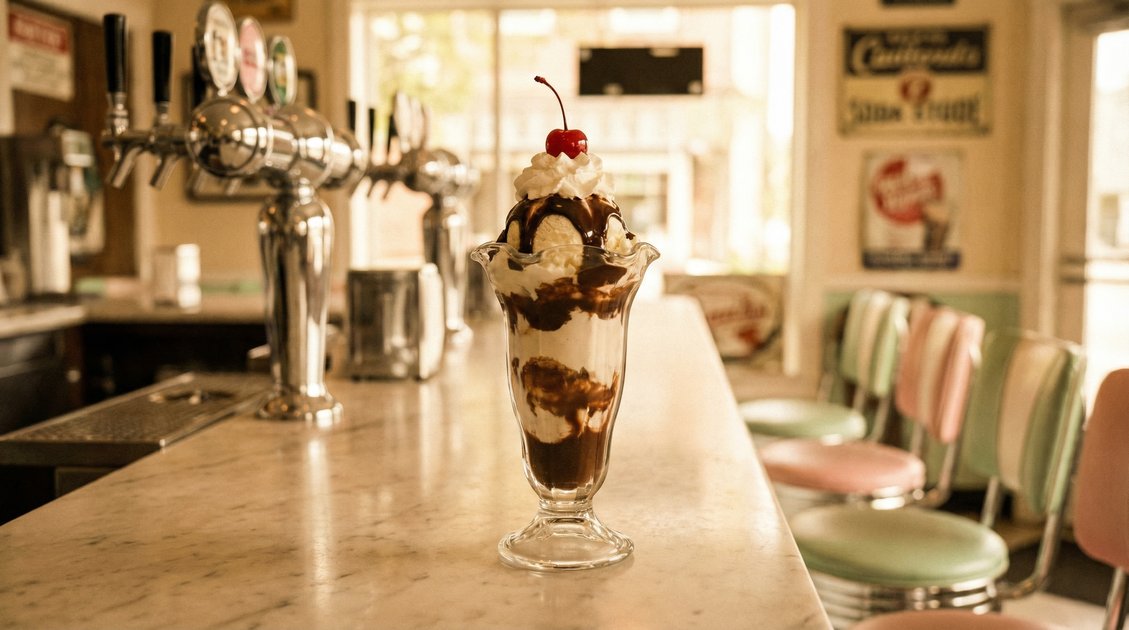
The drive-in menu was a masterpiece of focused simplicity. Burgers, hot dogs, french fries, onion rings. Milkshakes in chocolate, vanilla, and strawberry. Root beer floats — the house specialty at A&W, which had been perfecting the formula since 1919. Cherry Cokes. Banana splits. The occasional corn dog.
Nothing on the menu was complicated, and nothing needed to be. The food was fresh, made to order, and eaten in the best possible setting: behind the wheel of your own car, on a warm evening, with the radio playing and the neon glowing and the whole summer stretching out ahead of you.
The root beer float deserves special mention. At A&W drive-ins, it came in a frosted mug — chilled in the freezer until the glass itself was cold to the touch — with a generous scoop of vanilla ice cream and root beer poured slowly over it so the foam rose to the top. It was the perfect drink for a summer night, and it tasted like nothing else in the world.
Friday Night at the Drive-In
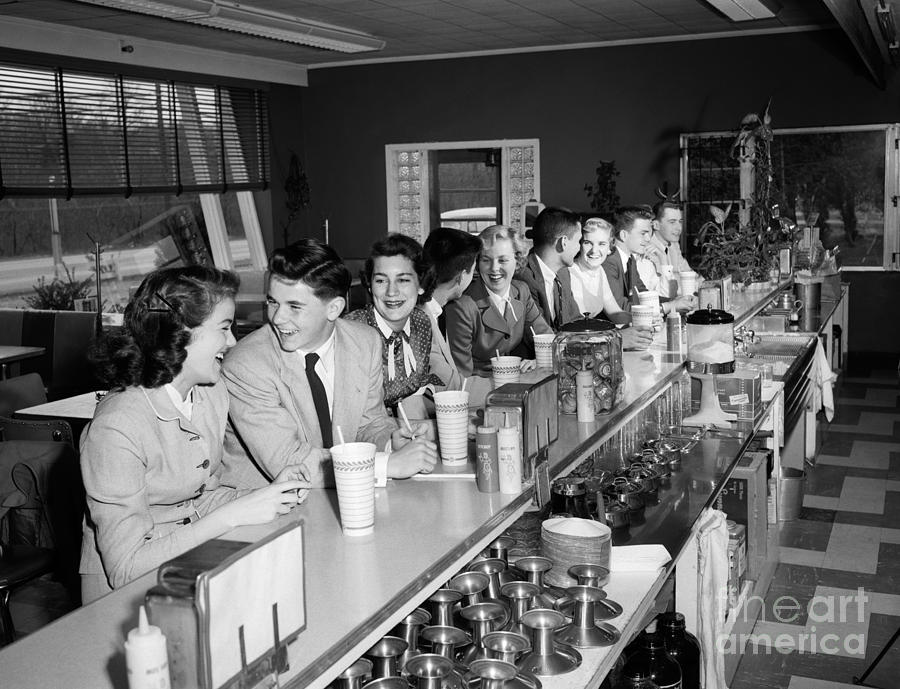
For teenagers in the 1950s and early 1960s, the drive-in was the social event of the week. Friday night meant cruising the main drag, then pulling into the lot to see who was there, who was with whom, and what was happening. The drive-in was a social switchboard — the place where the week's news was exchanged, where romances began and ended, where the class hierarchy was negotiated over baskets of fries.
You'd arrive early to get a good spot. You'd order the same thing you always ordered, because the ritual was part of the pleasure. You'd stay until the lot started to empty, reluctant to let the evening end. And when you finally pulled out onto the main road and headed home, you were already looking forward to next Friday.
The Legacy
Most of the great drive-ins are gone now. A&W still operates, though the frosted mugs and carhops are largely a memory. Sonic Drive-In has kept the carhop tradition alive in a modified form, and a handful of independent drive-ins survive in small towns across the country, drawing crowds of nostalgic customers who want to taste something that's mostly disappeared.
But the drive-in's influence never really went away. Every time you eat in your car, every time you pull up to a window and receive your order without leaving your seat, you're participating in a tradition that began with a young woman on roller skates, balancing a tray of root beer floats in a parking lot lit by neon, on a warm American evening that felt like it would last forever.
Those evenings didn't last forever. But the memory of them does.